Rankings Up But Sales Flat? Four Real Root Causes
"Our rankings hit page one but calls barely moved." The most confusing pattern in SEO projects. The four real root causes behind it.
Rankings Up But Sales Flat? Four Real Root Causes
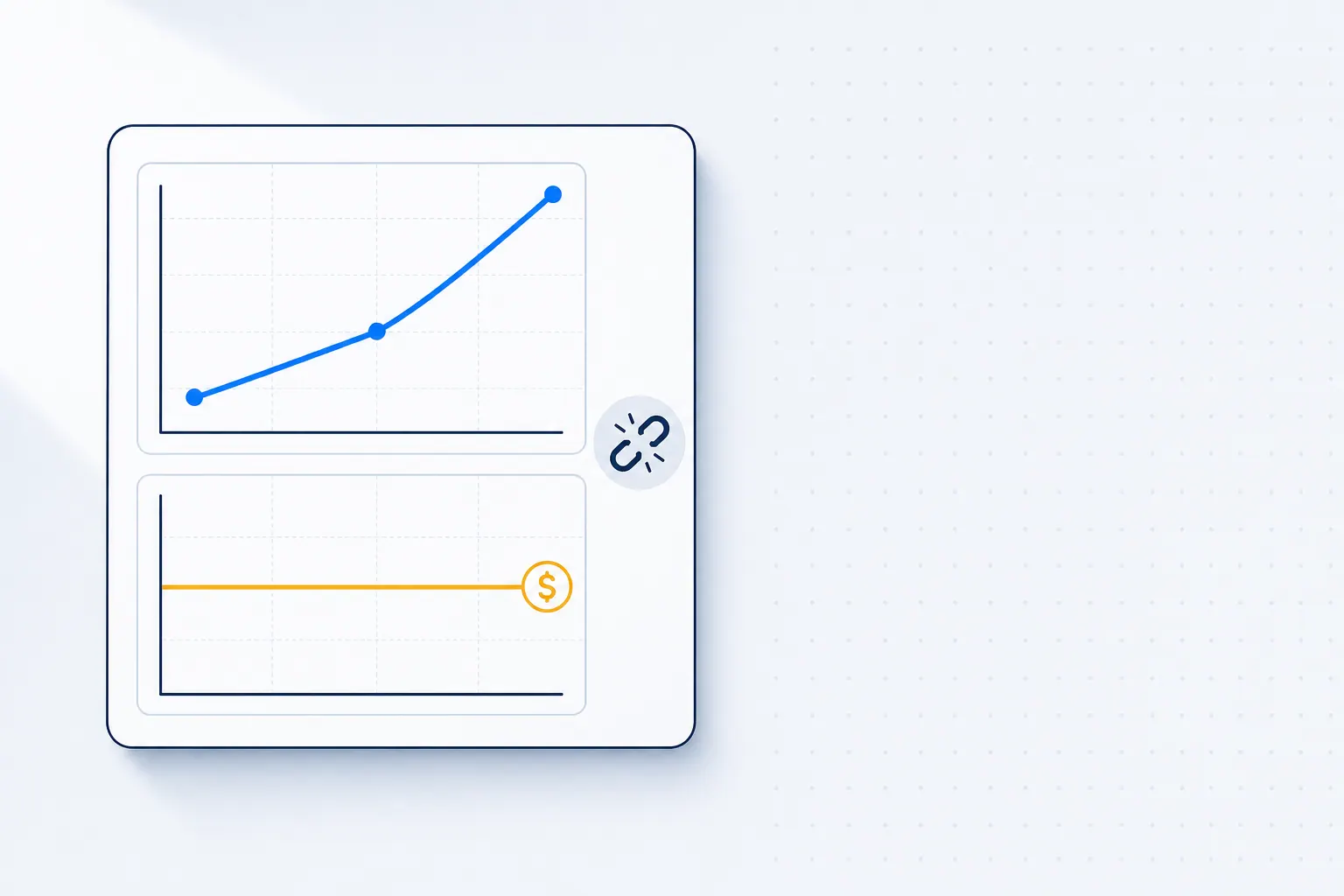
The most awkward moment in monthly SEO client reviews looks like this: we open Google Search Console, keyword rankings are climbing beautifully — multiple core terms hitting page one, clicks up 60 percent year over year, impressions doubled. Then the client asks, "so how much did calls and bookings grow this month?" — and the business numbers are flat.
This "SEO data looks great but the business does not move" pattern is rarely a problem with SEO. It is almost always a broken link in the chain after SEO. Below are the four most common real root causes from auditing dozens of SeoMata client engagements, ordered by how often we find them.
Root Cause 1 — Search Intent Mismatch
Keywords that hit page one are not necessarily what "buying customers" are searching. The most striking case we audited was an HVAC company whose SEO team pushed "how does central air work" into top three, driving 800+ monthly organic visits. The searchers were almost entirely curious browsers or students doing homework — none were in "my AC broke, I need someone today" mode.
Counters:
- Audit your top 10 ranking keywords. Reclassify each by intent: transactional, urgent, informational, curious.
- Tilt SEO investment toward transactional plus urgent, even when their search volumes are smaller.
- Keep producing informational content, but treat it as nurturing, not direct conversion. Pair with the SeoMata local SEO service intent-mapping framework.
Root Cause 2 — Traffic Arrives, but the Page Is Informational
This problem usually pairs with Root Cause 1. Even when you do rank for high-intent transactional terms, a landing page designed like a long-form blog (walls of text, no clear CTA) sends visitors away after a single read.
| Design | Dominant element | Conversion rate |
|---|---|---|
| "Informational" style | Long intro + service list + footer contact | ~1.5% |
| "Decision" style | Above-fold call CTA + 30-minute response promise + price range + real reviews | ~8–12% |
Same traffic, 5–8x conversion difference. The difference is not copy elegance — it is whether the structure serves "decide now."
Root Cause 3 — Calls Come In But No One Answers
This is the hardest root cause to raise with clients, and also the most common. SEO grew traffic, the landing page is well designed, but the client's internal reception is broken: the front desk only answers during business hours, voicemails are ignored, form submissions sit for 24 hours before follow-up. In emergency-service verticals, customers who wait 24 hours already hired a competitor.
Verification method:
- Use a virtual number (without telling the client) to call their service line 10 times across weekdays, evenings, weekends.
- Submit an anonymous inquiry form and log the response time.
- Build the funnel: "SEO traffic in" vs "actually reached / responded."
If pickup rate is below 60 percent or response time exceeds 4 hours, adding SEO traffic is pouring water into a leaky bucket. Fix the reception side first.
Root Cause 4 — Attribution Cannot See SEO's Real Contribution
Sometimes sales actually did grow, but the CRM shows "traffic source = direct" or "referrer = unknown" for 60+ percent of new business. SEO-driven traffic is mis-attributed to other channels, so the data tells a "SEO is not contributing" story even when it is.
Common attribution black holes:
- User clicks through a search result, then the PWA/app transition converts the referrer to "direct."
- User searches, bookmarks the link, returns days later — attributed to "direct."
- User searches and calls, but no call-tracking is set up — phone source is completely blank.
- User searches, then converts via QR code or WeChat outside the web property entirely.
Solutions:
- Deploy call tracking (CallRail, CallSource, WhatConverts) so calls attribute back to specific source keywords and landing pages. Combine with the Google review growth service for unified call/review reporting.
- Switch from "first touch" to "data-driven" or "linear" attribution to avoid last-touch bias.
- Train the sales team to ask "how did you find us?" as a standard opening, and log answers in the CRM.
Diagnostic Sequence
If you are facing "rankings up, sales flat" right now, work through the diagnosis in this order:
- First, intent. Are the keywords you rank for what buyers actually search?
- Then, the landing page. Can users take the next action once they arrive?
- Then, reception. How long after a user reaches out before they hear back?
- Finally, attribution. Is SEO's contribution actually being recorded?
Roughly 70 percent of "data good, sales flat" problems are found in the first two steps. The latter two are gray zones neither SEO nor business teams own — and exactly where the highest-ROI fixes hide.
FAQ
How quickly can I diagnose the bottleneck?
Intent and landing-page diagnostics can be done in two days. Reception verification takes one week of mystery-shopping. Attribution audit takes 2–3 weeks of CallRail data plus CRM cleanup. Plan a 30-day discovery window.
Should I pause SEO while fixing reception?
No, keep SEO running. SEO momentum is hard to restart. Fix reception in parallel — typically a one-week operational sprint to install proper after-hours coverage and 4-hour SLA on form replies.
How much does call tracking cost?
$45–$200 per month for a single tracking number with full call recording and source attribution. Worth every dollar — it almost always uncovers $5,000+/month of misattributed pipeline within the first quarter.
What if the sales team resists "how did you find us?"
Make it a CRM-mandatory field with auto-validation. If the field is blank, the deal cannot move to next stage. After two weeks the resistance disappears because the answers become useful.
Conclusion and Next Steps
SEO rarely "fails" in isolation. The failure pattern is almost always a broken downstream link. Run the four-step diagnostic before adding more keyword targets. For deeper reading, see the SeoMata SEO guides library or the official Google attribution modeling guide.
- Pull your top 10 ranking keywords and tag each by intent today. Match against the SeoMata local SEO service framework.
- Run the mystery-shop test on your reception process this week. Track using the Google review growth service reply-time dashboards.
- If after the four-step diagnostic sales still stay flat, the bottleneck is the offer, not the funnel. Book a 30-minute diagnostic on our case studies page.
Bottom line: rankings are an input, sales are an output. The chain between them has four links — diagnose each.
Related articles
Google Maps Ranking Checklist for Local Service Businesses
21 checkable Google Maps ranking actions for local service businesses, grouped by "today / this week / this month". Pure action list, no theory.
Technical SEOThree Schema Tags Most Service-Site Owners Miss
Schema gives your site free extra SERP real estate — but 90% of service-business sites skip the three most basic tags. The cost compounds quietly.
SEOFirst-Screen 5 Seconds: Why Your Site Loses Visitors
53% of mobile visitors bounce before your first screen loads — not a traffic problem, a product one. Three common 5-second leaks and how to fix them.