Strategic Project Overview & Growth Goals
This industrial weighing and measurement provider is based in Houston, Texas, serving industrial manufacturing, logistics, lab, and quality-control scenarios with weighing, calibration, and measurement solutions. The business covers industrial floor scales, rail scales, vehicle weighing systems, hanging scales, in-motion checkweighers, lab instruments, accessories, and precision balances, plus ISO/IEC 17025 calibration, maintenance, and rental scale programs for short-term projects.
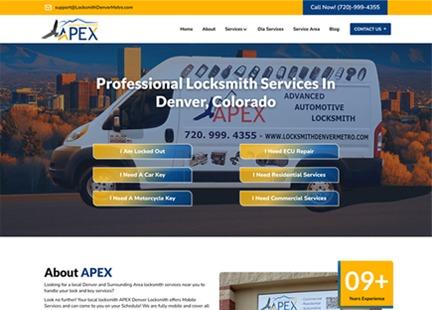
Offline, the company had built a solid Houston-area network on credentialed technicians, technical depth, and years of industrial-client trust. The web presence, however, didn't match that 'professional quality' feel — search visibility, local targeting, and service-page clarity were all weak, so procurement teams searching 'scale calibration Houston' or 'ISO 17025 weighing service' could rarely find the company.
Once SeoMata took over, the focus was narrow: not chasing general traffic, but ensuring manufacturing, logistics, warehousing, and lab customers with real procurement intent would find this company through the exact search phrases they use. The plan coordinated Web Design & Development, SEO, Local SEO, Content Writing, and Link Building — making 'professional + compliant + local' a brand asset that both search engines and procurement could recognize.
Primary project goals included:
- ›Land 'Scale Calibration Houston' and 'ISO 17025 Calibration' on page 1
- ›Capture stable Local Pack visibility across Houston and surrounding industrial zones
- ›Rebuild the website from a "product brochure" into a procurement-grade conversion funnel
- ›Lift domain authority via high-quality industrial / logistics / engineering backlinks
- ›Make sure procurement, engineering, quality, and compliance teams all find the company in their own search context
This case captures how SeoMata integrated Web Design & Development and SEO into one program serving the industrial B2B decision path.
Services SeoMata Delivered
Project Overview & Business Context

The company serves industrial manufacturing, logistics, lab, and transportation industries with industrial floor scales, vehicle scales, rail scales, in-motion checkweighers, hanging scales, lab balances and more, plus ISO/IEC 17025 calibration, repair, maintenance, and rental services. Offline reputation is strong, but the web presence lagged the real capability.
Houston industrial search has a clear pattern: procurement, quality, and engineering teams use highly specific terminology with strong geographic modifiers and high requirements on content depth and compliance credibility. The old site was insufficient on service stratification, compliance description, and local pages — unable to capture this high-value traffic.
Initial Audit & Opportunity Assessment
We started from the digital baseline with a 360-degree audit covering technical performance, SEO health, UX, GBP, backlink profile, local citations, and content structure — the aim being to identify every constraint on visibility and conversion in one pass.
Key issues identified:
- 1No clear service hierarchy or conversion design — calibration, repair, rentals, and sales all mixed together
- 2Weak local-SEO targeting — missing Houston city pages and industrial-zone landing pages
- 3Google Business Profile had only basic registration — categories, description, and service-area configuration incomplete
- 4No structured data or compliance-related content assets deployed
- 5Keywords concentrated on brand terms — industrial-service high-intent terms essentially missing
- 6Unclear conversion path: friction across quote form, click-to-call, and service navigation
Audit conclusion: offline, this company runs a high-barrier, compliance-heavy industrial service — but its online presentation was just a static product brochure. Systemic Web Design & Development + SEO upgrades were required to lift the digital asset to match the offline capability.
Web Design & Development: Turning Industrial Service Into a Buyable Product
The new site's core goal: help industrial procurement, equipment engineers, and on-site quality managers understand "what you can do / where you can do it / how long it takes / how to start" with the fewest possible jumps.
We didn't use the typical industrial-site "wall of photos + walls of tech specs" pattern. We reverse-engineered the site structure from the actual customer decision path.
Core design principles:
- ›Mobile-responsive & cross-device: field engineers and warehouse managers often access from workstations or on the road — consistent experience is mandatory
- ›Speed and stability: image optimization, code minification, hosting tuning — first paint under 2.5 s
- ›Clear quote / call entries: contact entries always visible and prompted on every page
- ›Clear service stratification: calibration, repair, rental, sales, and weighing systems each on its own page
- ›Trust and compliance signals: ISO/IEC 17025 accreditation, service coverage, technician credentials, industrial cases prominent
- ›Search-friendly IA: URL and Heading hierarchy reflect the real service structure
- ›HTTPS and secure forms: a baseline for compliance-sensitive customers
A consistent visual and typographic language runs through the entire site, making it more than an information delivery surface — it becomes a conversion tool genuinely serving the industrial B2B decision path.

SEO Strategy Framework
B2B industrial SEO cannot copy a local-retail or e-commerce playbook. We anchored the strategy around three axes — 'industrial search behavior + ISO compliance needs + Houston strong local relevance' — and locked it into nine interlocking modules.
Every action maps to measurable keyword, traffic, and inquiry metrics so every step can be tested in the monthly review.
Keyword Research & Intent Mapping
Seeded from the four core business lines (calibration / repair / rental / equipment sales), mined service-type seed keywords, stacked Houston and surrounding industrial-zone geographic modifiers — building a keyword map stratified by transactional / compliance / informational / local intent.
Search Intent Stratification
Procurement, quality, and engineering teams follow very different search paths. We segmented keywords by role and decision stage onto specific landing pages so a single page does not try to answer completely different questions.
On-Page SEO
Title, Meta, H1–H3, body, and image ALT all rewritten around industrial terminology + Houston modifiers, ensuring natural embedding while placing compliance statements (ISO/IEC 17025, traceable calibration chain) in visible positions.
Content Structure & Scannability
Industrial decision-makers prefer to scan first and decide whether to deep-read. Every service page uses clean subheadings / bullets / short paragraphs, putting service scope, response time, and compliance standards within a 30-second read.
Internal Linking Framework
Stable relational network between service pages ↔ city pages ↔ compliance pages ↔ industry-application pages — improving crawl efficiency and link-equity flow while guiding visitors to inquiry points.
Technical SEO Hardening
Tuned Core Web Vitals, mobile-first indexing, crawl errors, sitemap, canonical, and robots.txt for the access patterns of an industrial site, ensuring key pages stay continuously and reliably indexed.
Structured Data
Deployed Schema for LocalBusiness, Service, Certification, and Contact so search engines can accurately understand service scope, service area, and compliance credentials.
Local SEO Signal Strengthening
The naming conventions of Houston and surrounding industrial parks, logistics corridors, ports, warehouses, and manufacturing centers were folded into keyword and page-naming structures; NAP held strictly consistent across industrial-related directories.
Off-Page SEO & Authority Building
Backlink sources strictly screened to manufacturing, logistics, engineering, metrology, local chambers, and Houston industrial publications, swapping "volume first" for a high-quality "topical + geographic" structure.
This integrated SEO framework binds industrial search behavior, compliance thresholds, and local relevance into the same set of page structures — laying a sustainable foundation for organic growth in the Houston industrial market.
Keyword Research: Mapping Industrial Procurement Language Into the Site
Industrial searchers' language density is far higher than consumer users — they use highly professional phrases like 'ISO/IEC 17025,' 'load cell,' 'in-motion conveyor,' 'rental truck scale.' The essence of keyword research is aligning these real phrases to appropriate landing pages.
Core research moves:
- ›Seeded from core business: industrial-scale calibration, load cell testing, pressure gauge calibration, torque wrench calibration, scale repair, equipment maintenance, rental truck scales
- ›Stacked Houston and surrounding geographic modifiers — city and industrial-park level
- ›Used professional tooling to assess volume, competition, seasonal stability, and local demand trends
- ›Stratified by intent: transactional / compliance / informational / local
- ›Mined high-converting long tail to capture buyers about to request a quote
- ›Dedicated evaluation of compliance-related keywords: ISO/IEC 17025, traceable calibration, equipment certification
- ›Difficulty scoring; prioritized the 'high intent + medium competition' sweet spot
- ›Systematic competitor keyword-gap analysis to fill industrial terms competitors miss
- ›Split brand vs. non-brand terms so growth does not depend on a single source
- ›Reverse-mapped keywords from five application scenarios — manufacturing, logistics, warehousing, lab, transportation
Off-Page SEO: Trust Signals Matter More Than Link Count
Industrial B2B link building runs on "topical relevance + geographic relevance + verifiable." We assessed historical link risk and built a sustainable backlink ecosystem around industrial manufacturing, logistics, engineering associations, local chambers, and metrology publications.
Issues identified in the audit:
- ›Large share of historical links from generic directories weakly relevant to industry
- ›Several links from domains with low authority and sparse organic traffic
- ›Anchor text overly concentrated on exact-match service keywords
- ›Sparse brand mentions, lacking natural language context in industrial content
- ›Inconsistencies in business name, address, and phone across local citations
- ›Severe under-coverage of industrial, engineering, logistics, and local sources
- ›No systematic tracking of new / broken backlinks
- ›Very little referral traffic from existing backlinks — pointing to weak real credibility
Local SEO: City + Industrial Zone + Logistics Corridor Triple Coverage
For industrial customers choosing a calibration or metrology provider, geographic reachability is nearly as important as credentials — whether techs can deploy on-site quickly and pick up urgent jobs at any time is the decider for an order.
Our local-SEO framework went beyond the city-level "Houston" target down to industrial parks, logistics corridors, ports, and manufacturing centers.
Main local SEO actions:
- ›Built dedicated, keyword-rich landing pages per Houston service area and surrounding zone
- ›Keyword coverage on industrial parks, logistics corridors, ports, warehouses, and manufacturing centers — scenario-level targeting
- ›Maintained NAP consistency across 50+ industrial directories, chambers, and local platforms
- ›Fully optimized GBP: categories, hours, service areas, compliance credentials, high-quality photos
- ›Deployed LocalBusiness + Service + Certification Schema
- ›Embedded Google Maps on every city page to reinforce geographic relevance
- ›Ran dedicated mobile speed and usability tests
GBP: Active and Granular Operation
Even industrial B2B clients often do an initial 'who calibrates nearby?' check on Google Maps. The GBP must be operated as a standalone 'second website,' not registered-and-forgotten.
Key GBP moves:
- ›Fully configured primary and secondary categories to match calibration / metrology / industrial-service intents
- ›Filled out service descriptions, hours, service areas, and compliance-credential statements
- ›Built individual Service Listings for calibration, repair, rental, and equipment sales
- ›Built a structured review-collection workflow encouraging real, scenario-grounded feedback from industrial clients
- ›Replied to every review within 24 hours with a professional tone
- ›Uploaded real industrial-scene photos and kept a steady GBP post cadence
After 3–6 months of consistent operation, the company holds steady Local Pack visibility for industrial queries, with significant lifts in direction requests and direct calls.
Reputation Management: Turning Industrial Project Cases Into Credibility
Industrial procurement weighs "verifiable past projects" heavily. We helped the company convert every successful calibration / repair / rental project into a referenceable content asset — strengthening E-E-A-T in SEO and directly lifting quote close rates.
Reputation and word-of-mouth strategy:
- ›Built a post-project client-feedback mechanism (email + on-site sign-off)
- ›Placed review CTAs on the website, service pages, and thank-you pages
- ›Embedded Google review feeds in appropriate spots and deployed Review Schema
- ›Wrote up high-value projects (rail scales, floor scales, compliance calibration) into shareable "project briefs"
- ›Maintained professional, restrained handling of negative reviews
- ›Fed customer feedback back into service operations and content optimization
Higher-quality genuine reviews directly raised SERP click-through and significantly lifted B2B decision-makers' trust before they sent in an inquiry.
Technical SEO: Solving the "Industrial Sites Are Always Slow" Problem
A common ailment of industrial sites is "image-heavy, slow first paint, poor mobile experience." For buyers that experience itself becomes a "professionalism signal" — if your own website doesn't open, they will struggle to believe field service is faster.
We did a full technical SEO rebuild on this site, making "stable, fast, indexable" the underlying principle.
Core technical optimizations:
- ›Image compression, CSS/JS minification, caching and server-response tuning — sub-2.3 s first paint on mobile
- ›Generated and submitted a clean XML Sitemap; optimized robots.txt to focus on key service pages
- ›Wrote descriptive ALT for every image
- ›Repaired historical 404s and redirect chains, preserving link equity
- ›Site-wide HTTPS and secure-form configuration
- ›Deployed LocalBusiness / Service / Certification Schema
With a stable technical foundation, the marginal returns of every content, link, and local-SEO action got amplified.
Competitor Benchmarking: Capturing Positions in Industrial SERPs
The Houston industrial-services market has both national chain calibration labs and independent providers deeply rooted locally. We ran a structured benchmark against the top-ranking competitors and identified reachable weaknesses.
Benchmark dimensions:
- ›Market positioning: which competitors lead in organic / map / paid
- ›Keyword gap: which high-converting, low-competition industrial terms competitors miss
- ›Local Pack strategy: GBP category selection, review cadence, proximity signals
- ›Conversion design: quote form, click-to-call placement, compliance credential presentation
- ›Content depth: service-page length, blog topics, technical-resource coverage
- ›Backlink profile: source relevance, geographic relevance, anchor diversity
- ›Technical performance: Core Web Vitals, Schema, mobile experience
From this benchmark we produced an executable roadmap of "where to overtake, with what, by when," with explicit expected returns on every action.
Content Marketing: Compliance and Technical Depth as Organic Traffic
Industrial B2B content marketing does not need humor — it needs "deep enough, accurate enough." We crystallized this company's real expertise in ISO/IEC 17025 calibration, equipment maintenance, and metrology applications into searchable, referenceable content assets.
Content marketing moves included:
- ›Wrote 1,000+ word deep service pages for each core equipment category (floor scales, rail scales, vehicle scales, in-motion checkweighers, etc.)
- ›Built keyword groups by service cluster to prevent internal competition
- ›Applied consistent H1–H3, Meta, ALT, and Schema best practices
- ›Published compliance-related educational content: ISO/IEC 17025 deep dives, traceable calibration chain, equipment acceptance checklists
- ›Built dedicated application-scenario pages for each industry (manufacturing, logistics, warehousing, lab, transportation)
- ›Embedded clear quote / call CTAs across all content
- ›Rolling refresh by seasonal demand (quarterly inventories, year-end acceptance)
High-quality educational content didn't just absorb long-tail keywords — it became natural fuel for link building, with many Guest Posts and industry citations grounded in these trustworthy resource pages.
Link Building: Push Industrial Relevance to the Maximum
The original backlink profile was weak with high risk. We ran a "clean up + rebuild + amplify" three-step play, shifting the structure into a healthy "topical + geographic + verifiable" shape.
Core link-building actions:
- ›Disavowed historical low-quality / risky links
- ›Published high-quality Guest Posts on industrial-manufacturing, logistics, and engineering-association blogs
- ›Submitted to 50+ vetted industrial directories and local chambers
- ›Built long-term partnerships with local industrial parks, logistics corridors, and manufacturing businesses
- ›Built referenceable resources like 'industrial equipment acceptance checklist' and 'calibration management manual'
- ›Earned citations and mentions in industrial publications through local PR and industry-event sponsorships
"Quality first + topical relevance + geographic relevance" maps every new link to marginal lifts in keyword rank and traffic, not vanity numbers.

Tracking & ROI

Industrial B2B traffic ROI evaluation is more complex than B2C — a single inquiry may correspond to a contract worth tens of thousands of dollars, but the sales cycle is longer. We built end-to-end tracking from "organic traffic → inquiry → sales opportunity → contract."
Key tracking moves:
- ›Google Analytics: session length, bounce rate, traffic source, conversion path
- ›Google Search Console: keyword clicks, impressions, average position, index health
- ›Form and call tracking: every inquiry attributed to the source keyword and landing page
- ›GBP Insights: calls, direction requests, profile views, local search queries
- ›Heatmaps and form-funnel analysis to identify conversion bottlenecks
- ›Monthly ROI report: keyword + traffic + inquiry + rank-movement quadrants
A transparent dashboard lets the team keep pushing resources toward high-ROI keywords and pages while cutting low-yield investment in time.
Keyword Growth & Search Visibility: Crystallizing Industrial Search Traffic Into a Stable Inquiry Funnel
One of the cleanest ways to measure an SEO program is how quickly keywords move from "invisible" to "clicked." After six months of continuous optimization, this company's footprint that previously only ranked for brand terms expanded to cover core industrial-service terms, compliance-related queries, and local-navigation queries.
'Scale Calibration Houston,' 'ISO 17025 Calibration,' and 'Load Cell Calibration Texas' all jumped from 'outside the top 100' onto page 1 or the Local Pack — turning search traffic directly into procurement-grade inquiries.
Keyword growth outcomes included:
- ›Core industrial-service keywords steady on page 1
- ›'Calibration Lab Houston' on the top 3 of the Local Pack
- ›Compliance-related keywords (ISO/IEC 17025, Load Cell, Pressure Gauge) forming a complete cluster
- ›Houston-area industrial-park / logistics-corridor long tail forming a stable multi-entry structure
- ›Steady rise in organic-search share of total inquiries
Page-1 placement captures more than 90% of organic clicks. Once core industrial-service keywords reached page 1, organic inquiries and sales opportunities grew almost in sync — rather than waiting for traffic to materialize before hoping for conversion.
More importantly, the growth is locked on three axes — "high intent + local + compliance" — so traffic is not flighty browsers but prospects already entering procurement decisions.
| KEYWORD | INITIAL RANKING | CURRENT RANKING |
|---|---|---|
| Scale Calibration Houston | Not in Top 100 | Page 1 |
| ISO 17025 Calibration Houston | Not in Top 100 | Page 1 |
| Industrial Scale Repair Houston | Page 5 | Page 1 |
| Load Cell Calibration Texas | Not in Top 100 | Page 1 |
| Truck Scale Rental Houston | Not in Top 100 | Page 2 |
| Rail Scale Service Houston TX | Not in Top 100 | Page 1 |
| Torque Wrench Calibration Houston | Not in Top 100 | Page 1 |
| Pressure Gauge Calibration Texas | Not in Top 100 | Page 2 |
| Industrial Weighing Systems Houston | Page 6 | Page 1 |
| Calibration Lab Houston | Not in Top 100 | Local Pack |
Our Results
Bounce Rate Optimization & UX Improvements
Industrial B2B users do not have higher patience thresholds than consumer users — especially when checking on a phone in the field. We optimized across four dimensions: speed, content relevance, internal links, and mobile experience.
Key engagement optimization steps included:
- 1Improved page load — prioritized first screen and critical-path resources
- 2Strengthened mobile UX — minimal forms, sticky click-to-call, smoother scroll
- 3Rewrote service-page titles and openings so search intent gets answered in 3 seconds
- 4Internal links strung together service → industry-application → compliance pages into a natural exploration path
- 5Added a clear quote CTA at the bottom of every service page
- 6Deployed FAQ Snippets to capture "ask-and-answer" industrial queries
After the redesign, service-page dwell time grew significantly and inquiry-submission events densified. The optimization makes sure this company isn't just found in industrial SERPs — it is trusted.
Domain Authority (DA) Growth
In industrial B2B, backlink value is not about volume — it is about "dual relevance on topic and geography." We built links around industrial manufacturing, logistics, engineering associations, local chambers, and metrology publications, gradually establishing the authority signals Google needed to recognize this company against entrenched Houston industrial competitors.
DA climbed from 12 in 2023 to 28 in 2025, alongside a sharp lift of core calibration keywords onto page 1 — proving the long-term sustainability advantage of a 'few-but-good' industrial link path.
Backlink Volume and Quality Growth(2023 → 2026)
The original backlink profile was dominated by generic directories and low-relevance sources with almost no real support for industrial search. SeoMata's strategy filtered around 'industrial manufacturing + metrology + Houston local,' cleaning up risk first then expanding high-quality sources.
Across 3 years referring domains grew from 52 to 210, the Dofollow share lifted from 18% to 63%, and total backlinks moved from 180 to 1.6K — but more importantly, the topical and geographic relevance of new links was dramatically higher than the historical profile, translating directly into steady keyword ranking lifts.
| Metric | 2023 | 2026 |
|---|---|---|
| Referring Domains | 52 | 210 |
| Dofollow % | 18% | 63% |
| Total Backlinks | 180 | 1.6K |